
A friend kindly gave me a copy of The Perfect Loaf, by Maurizio Leo, and very fortunately there was just about enough room in my suitcase to bring it home with me. The explanatory section at the start is very informative, even if most of it was pretty familiar already, and I did pick up a few new ideas. Still, the proof of the pudding and all that … so I resolved to make his Simple Sourdough.
A couple of weeks ago, I read a fascinating post on The Fresh Loaf, in which Kendalman described his interesting approach to stretch and fold and offered an alternative explanation of what is going on, because he believes the conventional view is mistaken. As near as I can tell, he says that there are two glues at work in the dough, a short-acting glue that preserves the shape of the loaf for about 30 minutes, and a longer lasting glue that maintains the whole mass as a whole mass. Stretch and fold activates the short-term glue, holding the loaf together while the bubbles caused by fermentation grow larger. It is the bubbles, ultimately, that give the dough its shape and hold it up.
Nearly round bubbles packed together keep the shape of their gluten foam better than any other bubble shape and the bigger the bubbles the better because that spreads the dough weight over a bigger surface area and so makes it easier to hold up.
Anyway, Kendalman helpfully linked to a video of his procedure, which he calls a kendalroll, that I watched absent-mindedly. The video certainly demonstrated that he got a lovely, well-risen loaf with no kneading and a lot of rolling. Proof of concept, as they say.
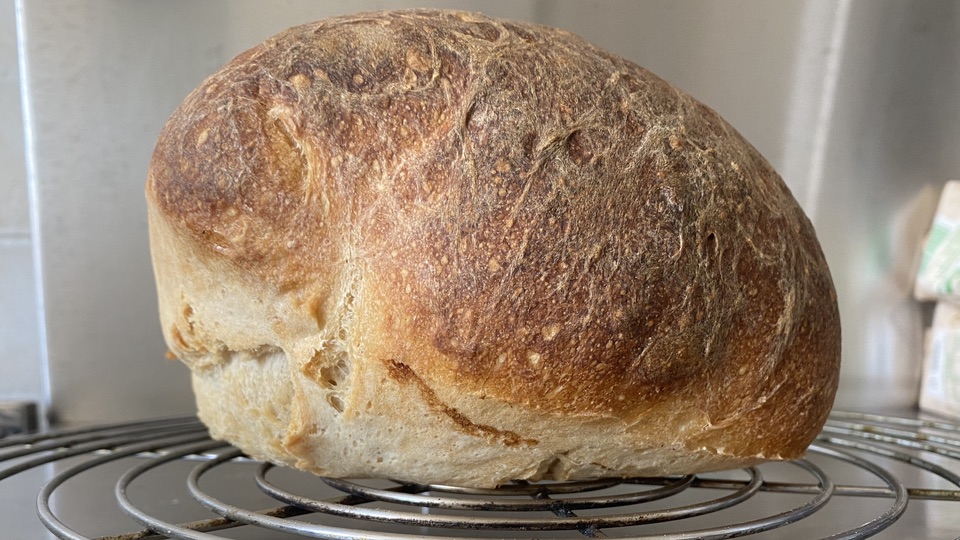
A couple of days later I discovered that we were almost out of bread, with a few days still to go before the big weekly bake, so why not give it a go.
I made a standard white sourdough at 75% hydration, mixed only enough to incorporate everything, and then proceeded to roll the log about every 30 minutes. I was a bit concerned that it might take a lot longer than Kendalman’s yeast-powered dough, so I used double my normal amount of starter; pre-fermented flour was thus 40% of total flour.
Rolling the dough is a bit of a messy business, hence the lack of photographs, but it is obvious rolling is building strength and structure in the dough. In the and, after four hours, it seemed big enough to bake. Getting it onto the stone was tricky without being able to simply invert a banneton onto a peel, but I managed.
Halfway through the bake, when I opened the oven to remove the steam pan, I was very pleasantly surprised by how little it had spread. The end result was a really good loaf, with a fine crisp crust and a good, light and even crumb. Judging by the minor blow-out at the bottom of the loaf, I could even have left it to rise a little longer. The gummy bit at the bottom of the crumb photograph maybe confirms this. Very passable.
My kitchen doesn’t really have room for doing more than one loaf this way (whereas bannetons stack nicely), so I cannot see adopting the kendalroll for everything, but for occasions when I want a good white loaf, especially for sandwiches, it is a winner.
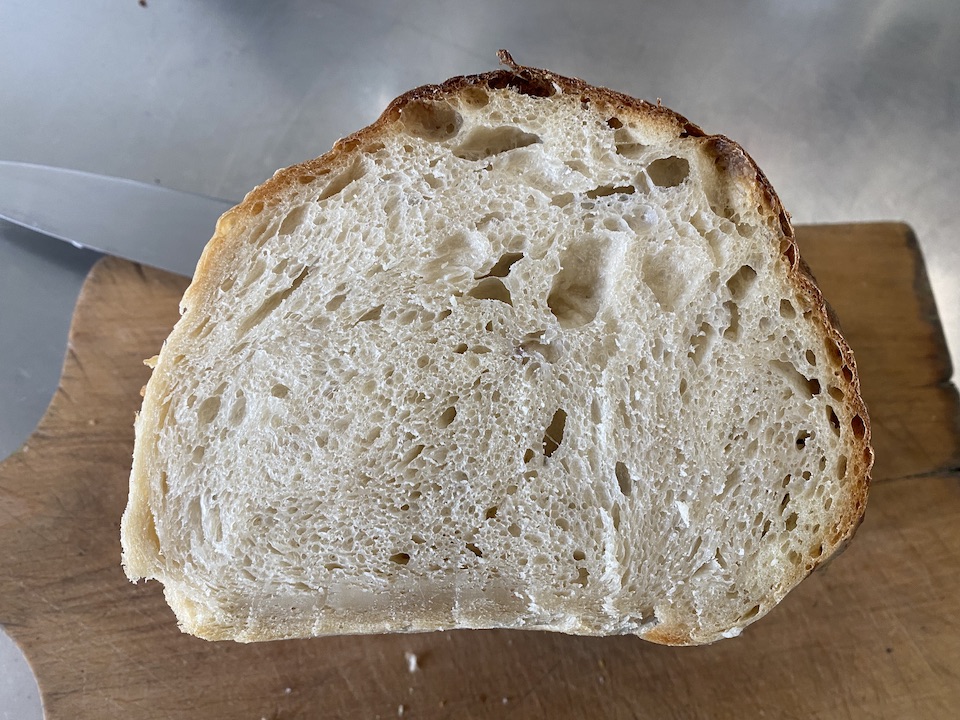
Final conclusion: I think I have a better understanding of stretch and fold, and I have a new arrow in my shaping quiver, which is a win all round.
Syndicated from jeremycherfas.net.
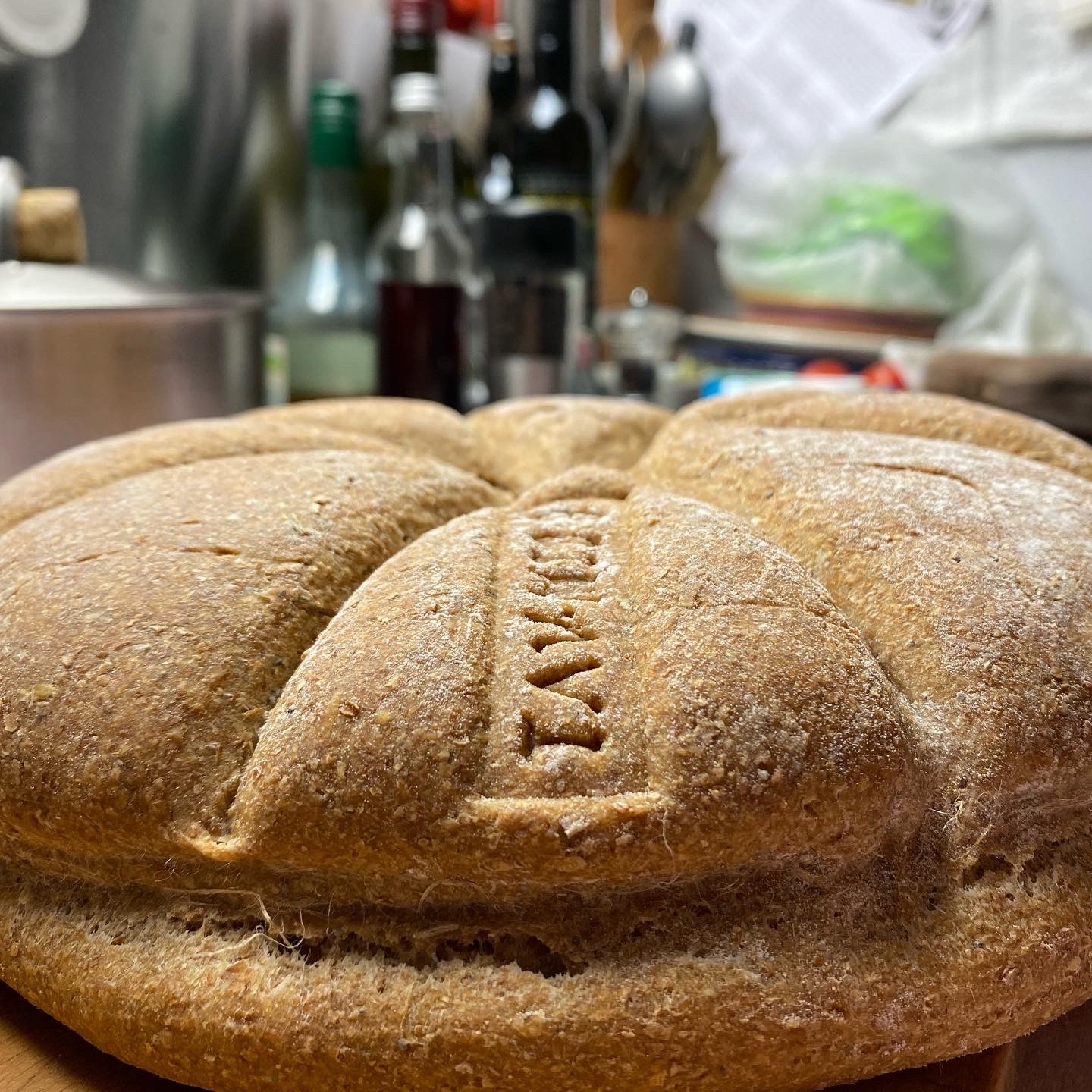
Panis quadratus, an offering to Fornax.
My visit to Ostia Antica last year, guided by the wonderfully knowledgeable Farrell Monaco, was destined to end in more than a podcast. There was no way I was going to be able to avoid attempting a panis quadratus of my own, and what better time to make the effort than during Fornacalia?
This is the festival during which ancient Romans made offerings to the goddess Fornax. She was charged with ensuring that when they parched the wheat, which made it easier to mill, the grain did not burn. I did not go as far as making my own mola salsa, but I had to attempt the bread, using Farrell Monaco’s latest iteration for a particularly festive version with fennel and poppy seeds and fresh parsley.
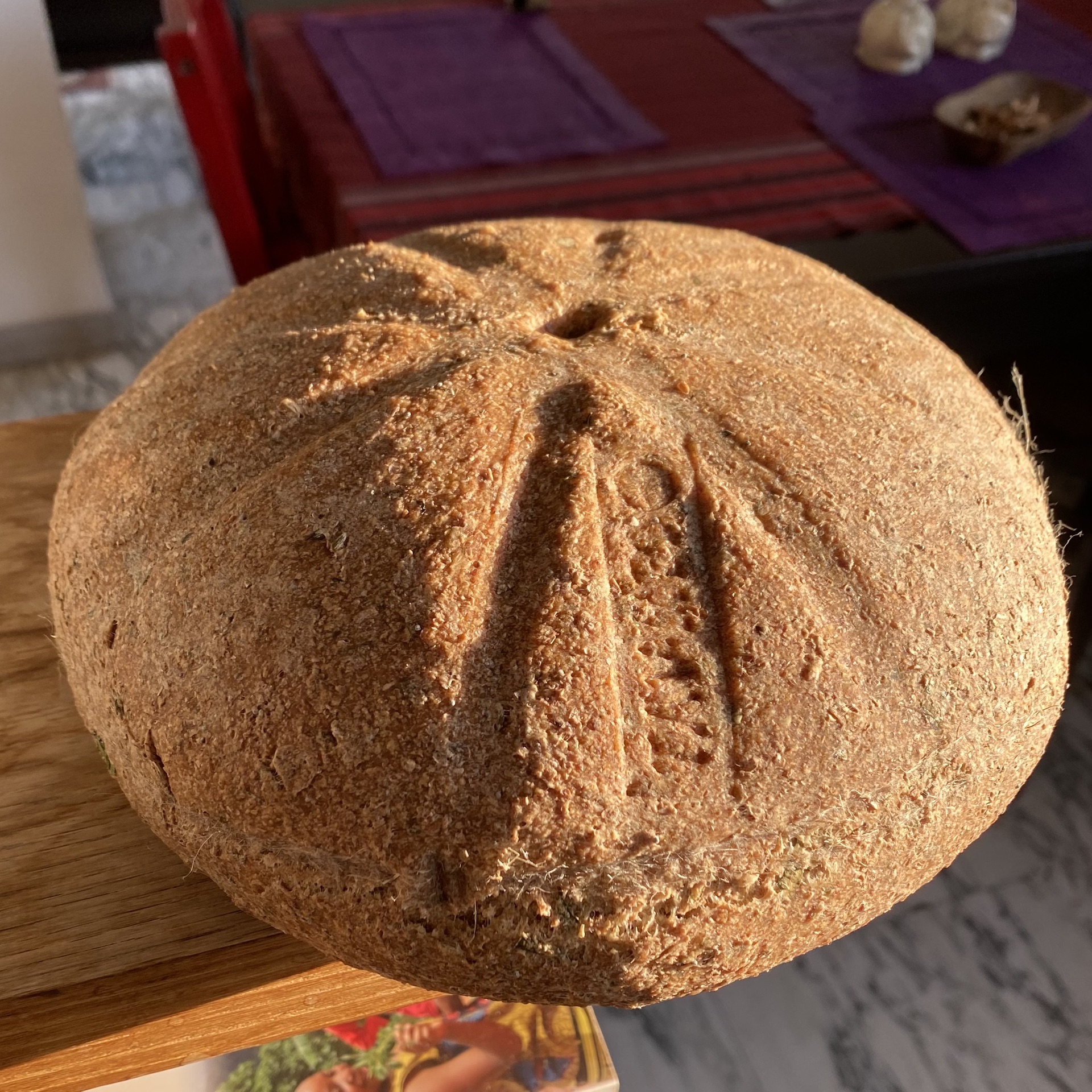
First attempt at panis quadratus. I was too timid with the demarcations, which almost vanished as a result
I’m not going to go into much detail, because thanks to her research and experiments Farrell’s articles tell you all you need to know and plenty more besides. The dough is actually very easy for a slightly experienced baker. It is quite stiff, about the same as my usual bagel dough, but being 100% wholemeal never quite becomes as smooth and elastic. Its stiffness, in fact, makes me really curious about the kneading machines that we saw in Ostia. Could wooden paddles really have had any impact on a 55% hydration dough of 100% wholemeal flour? I’d love to see a reconstruction in operation.
Anyway, the relatively small amount of leaven means it doesn’t rise very quickly, so on my first attempt I put it in the fridge overnight because I didn’t fancy staying up into the early hours even to please Fornax. The second time, I started much earlier in the day — about 8:00 am — and had a baked loaf by 5:00 pm.
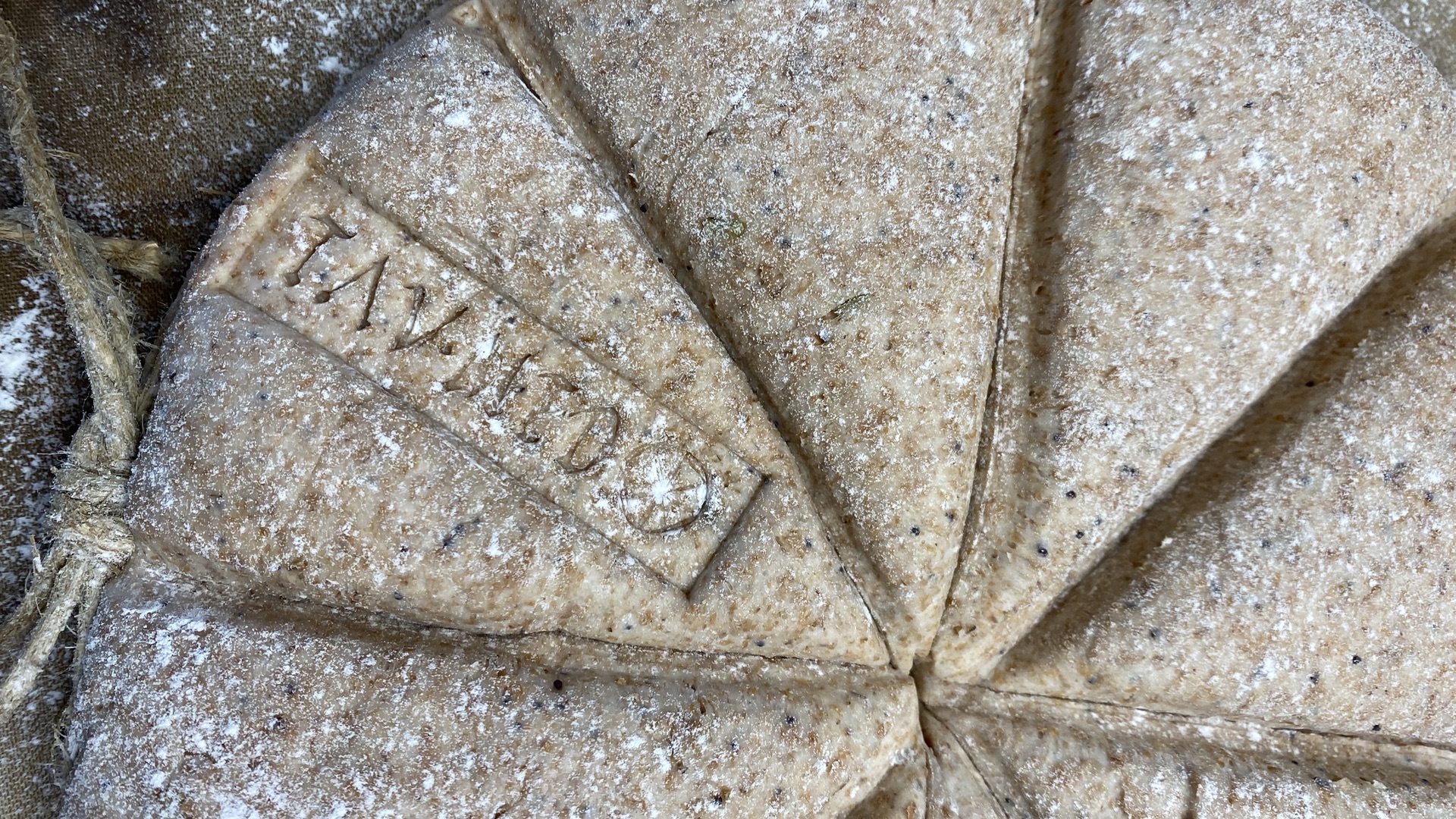
Second attempt ready for baking, with much deeper demarcations.
The tricky part is not the dough but the shaping and handling. The key elements of panis quadratus are the belt around its equator and the divisions pressed into the top to demarcate the sections. Tying the string, of finest Italian hemp, was a little bit fiddly for my fat fingers. And on the first trial, I was much too timid about pressing my reed (bamboo, actually) into the top of the dough. As a result, just as Farrell foretold during our visit to Ostia, the oven spring all but obliterated the marks. The next time I bore down on the bamboo and the marks survived well. And even though mine were the only loaves in my oven, for the finishing touch I did mark them with the bread stamp Farrell sent me.
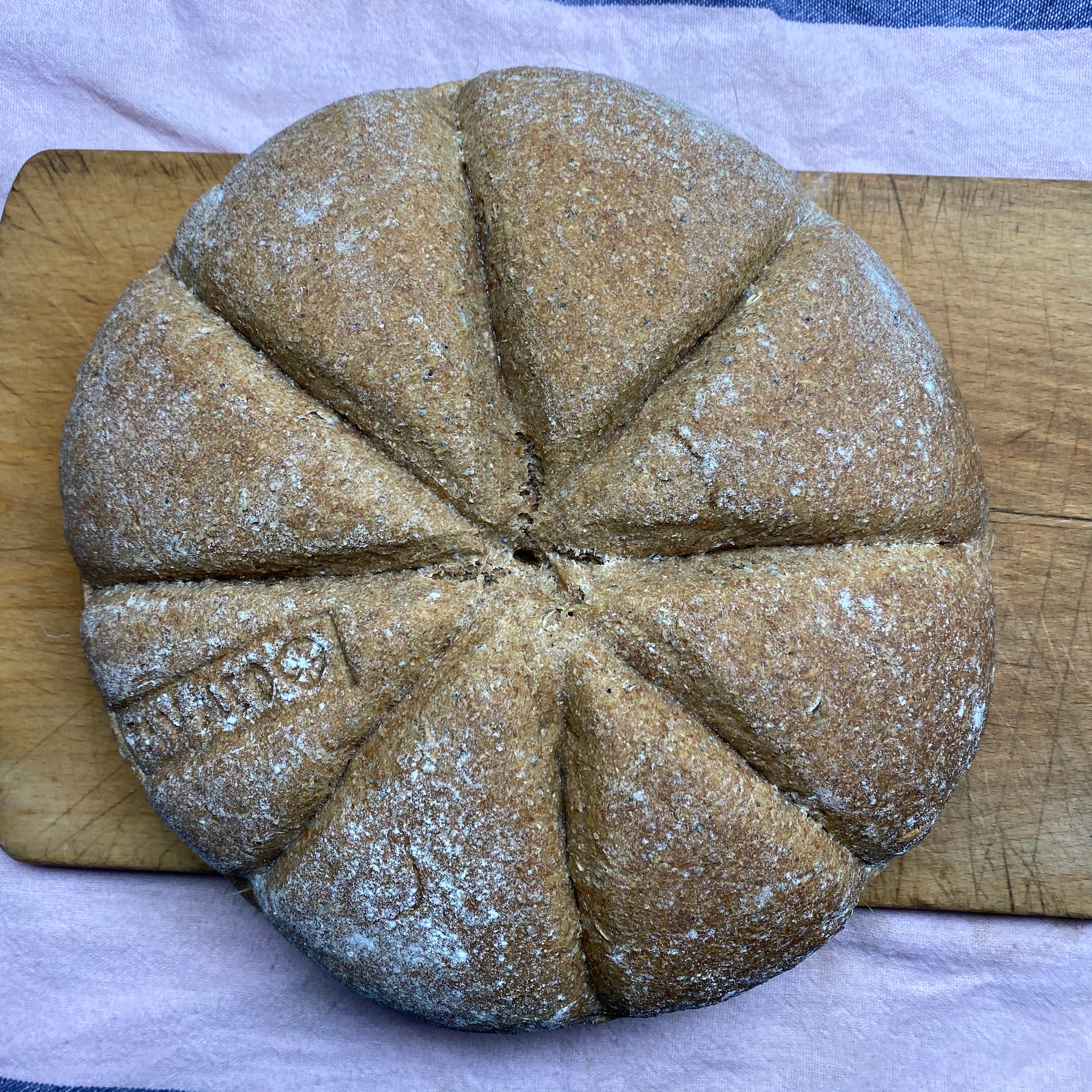
Second attempt just out of the oven, with the demarcations clear and the bread stamp visible.
As for the taste, it really is rather good. The bread is by no means light and fluffy, but it is not hard to chew either. It is soft, without being fluffy, and the taste of the poppyseeds and especially the fennel, comes through in every bite. I really like it with some well-aged sheep’s milk cheese, although it is also very good with a little butter and honey.
Fornacalia ends tomorrow. I reckon I will be in Fornax’s good graces for another year.
A little while ago I started to be more methodical about restoring some of the posts on my main website that had become disconnected as a result of various changes in the site’s back room. A few of those are bread posts that predate this site. Some of those I have already brought in here, while others I have not because they didn’t call to me. If I’m being methodical, however, I ought to be properly methodical.
This is what I wrote back in 2009:
Much of the bread you can buy in shops in Italy remains remarkably good. Some things, though, aren’t available, at least not nearby. One of those is rye bread. So I resolved to make some this weekend, using a recipe for Heidelberg Rye from the 1973 edition of Bernard Clayton Jr’s The Complete Book of Breads.
Conclusion: A fine loaf, but I do need to internalise that stuff about watching the loaf not the clock. If I can do it while the bread is in the oven, why not while it is rising?
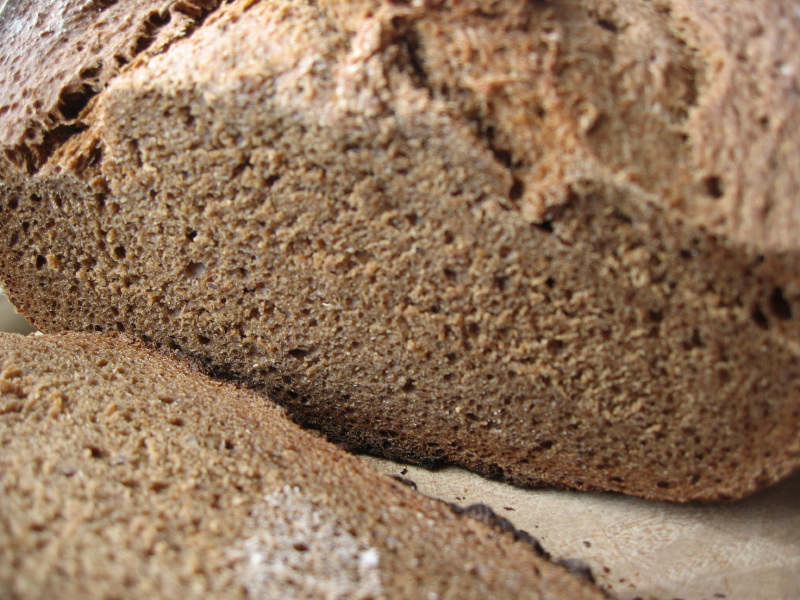
Full details remain at my main website. I’m posting this here at least in part to encourage me to try that recipe again.
Today, 7 February 2021, sees the start of the Roman festival of Fornacalia, namesake of this website. Curio maximus Farrell Monaco (or should that be Curia maxima?) decreed it so, as is her right. She suggested we bake Bread for the Gods: Mola Salsa; I am not ready for that and so, once again, I baked a very un-Roman bread. I’m sure the Romans knew of rye, but I don’t think they baked with it. Caraway they knew, sunflower seeds absolutely not. Anyway …
This is now the third time I have baked David Kaminer’s 100% rye sourdough. The recipe seems complicated at first glance, but it really isn’t, and I am sharing it here (finally) only because I have successfully reduced the quantities to make two good-sized loaves (about 2.1 kg of dough) and need to have a reference for myself. It takes a while, but very little of that requires any activity. Ideally, if you start to build the leaven on the morning of day one, you will have bread to eat on the morning of day three.
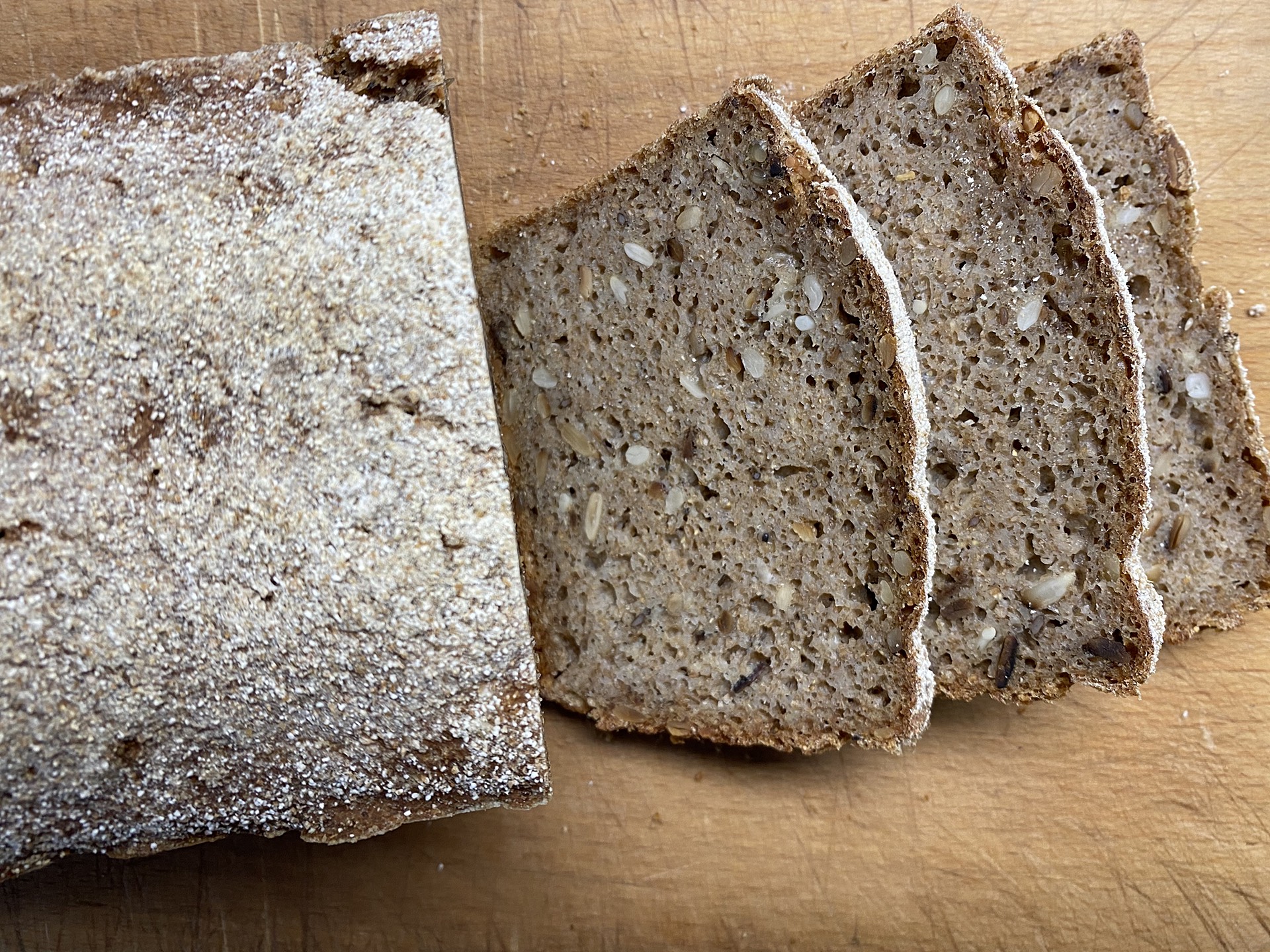
It goes roughly like this:
-
Day one, morning, first build of leaven
-
Day one, late afternoon, second build of leaven
-
Day one, late afternoon, make soaker
-
Day two, morning, mix final dough
-
Day two, 3–4 hours later, bake
-
Day two, allow to cool completely and “settle”
-
Day three, you may now eat your bread
Leaven
- 675 gm at 100% hydration
I build the leaven in two stages. It really does not matter what kind of starter you start with. I generally use my 75% hydration wholemeal starter, but given that it makes up only about 2% of the leaven, it makes no difference.
- 15 gm starter
- 30 gm whole rye flour
- 30 gm water
Mix up the first build of the leaven and leave to double or more in volume. Mine usually takes about 6 hours to do so.
- 75 gm leaven
- 300 gm whole rye flour
- 300 gm water
About 4–5 hours before bed time, build the leaven again. It wants some time at room temperature before you put it into the fridge to continue fermenting overnight.
Soaker
- 140 gm whole rye flour
- 140 gm toasted sunflower seeds
- 9 gm caraway seeds
- 20 gm salt
- 145 gm water
- 70 gm old bread
I usually make the soaker immediately after the second build of the leaven and, as per David Kaminer’s tip, I make it in the final mixing bowl, because cleaning.
The only tricky part is the old bread. If this is your first time, you might not have any. That doesn’t matter, just leave it out, but try to save 3 or 4 slices from this bake for the next time you want to make this recipe, which you will. It adds a lot of depth. David is suitably vague about the amount of old bread, but I have found that 70 gm of dry bread is good for me. At the very start of the process I put it into a jug of water to absorb all the water it can.
Toast the sunflower seeds, either in a big skillet or under a grill, until you get a good whiff of that nutty aroma. Mix with the flour and salt. Add the old bread, squeezed, but not too much, and broken up as best as you can. Then add the water and stir everything to combine well. Cover and leave to stand overnight.
Final dough
- 675 gm leaven
- 525 gm soaker (approx.)
- 450 gm whole rye flour
- 470 gm hot water (40°C)
- Loaf tins
Before you begin, prepare your loaf tins. Mine are quite small in cross-section, and I keep meaning to invest in some larger ones, but thanks to Brexit I can’t get the ones I should have got last year. No matter. Although the tins are supposedly non-stick, a decent coating of oil helps a lot.
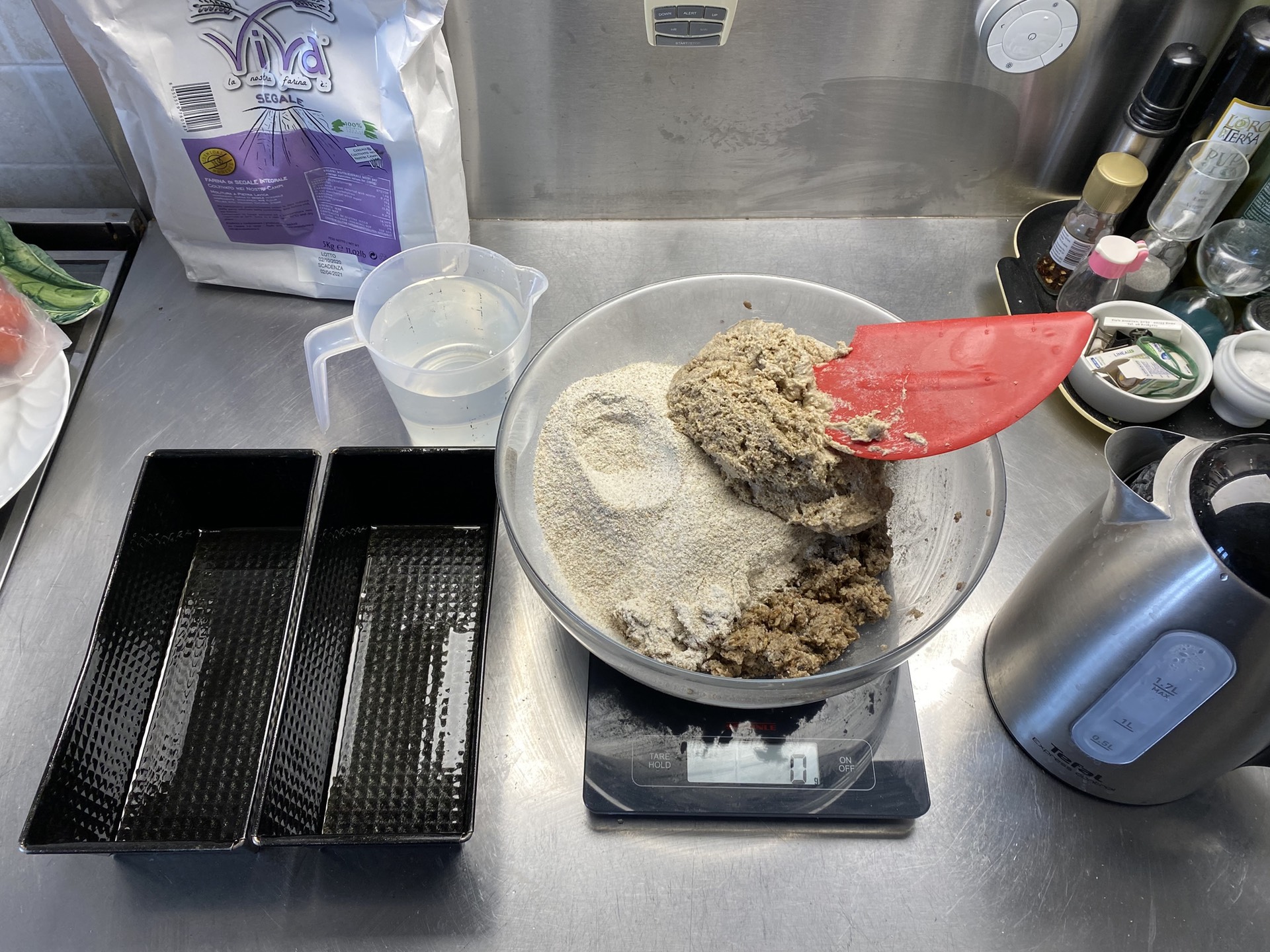
Remove the leaven from the fridge and add it to the soaker in the bowl. Add the rye flour and the hot water. (I have a kettle that tells me the temperature of the water, so I set it to boil and remove it when it hits the mark.) Measure the water and pour it into the bowl. Now things get sensuous.
Keeping one hand clean and a scraper handy, squidge the dough through the fingers of your other hand. The video here shows exactly what I mean. You cannot knead this dough, but you do need to ensure that it is very well mixed. It feels somewhat strange at first because the water is hot and the leaven is cold and you move from one to other in unexpected ways. Soon, though, the whole thing is of an even consistency and temperature.
Scrape your hand clean and then persuade the dough into the tins. I like to use a scale to ensure that the tins contain the same amount of dough. With wet fingers, pat the dough down to level it in the tin. Now sift a little rye flour over the top of the dough, aiming for a light and even covering.
Put the tins somewhere warm to rise. They are ready when you can see nice cracks opened up in the rye flour, but in truth in my tins the dough only rises about 1 cm, if that.
Preheat the oven as hot as it will go, starting roughly when you notice the first small cracks in the rye flour. The loaves will be ready to bake 45 minutes or so later.
Bake at about 245°C for 20 minutes, then lower the temperature to about 205°C for another 60–70 minutes. Remove the tins from the oven and allow to cool for about five minutes before extracting the loaves and then allowing them to cool on a rack for at least 18 hours. Most bread, and especially rye bread, is a lot tastier after it has been allowed to cool properly, and rye needs a good long while to become soft and moist rather than gummy.
At some point before you finish the loaf, cut three or four slices and allow them to dry before putting them somewhere safe, so that next time you can add the old bread as you should.